> For the complete documentation index, see [llms.txt](https://docs.luciq.ai/llms.txt). Markdown versions of documentation pages are available by appending `.md` to page URLs; this page is available as [Markdown](https://docs.luciq.ai/product-guides-and-integrations/integrations/microsoft-teams.md).
# Microsoft Teams
Connect Luciq with Microsoft Teams to receive notifications for bug reports, crashes, and performance issues directly in your Teams channels.
You can integrate Luciq with Microsoft Teams and forward any bugs you receive to a channel or team of your choice. Here are the steps you need to follow to set up the integration.
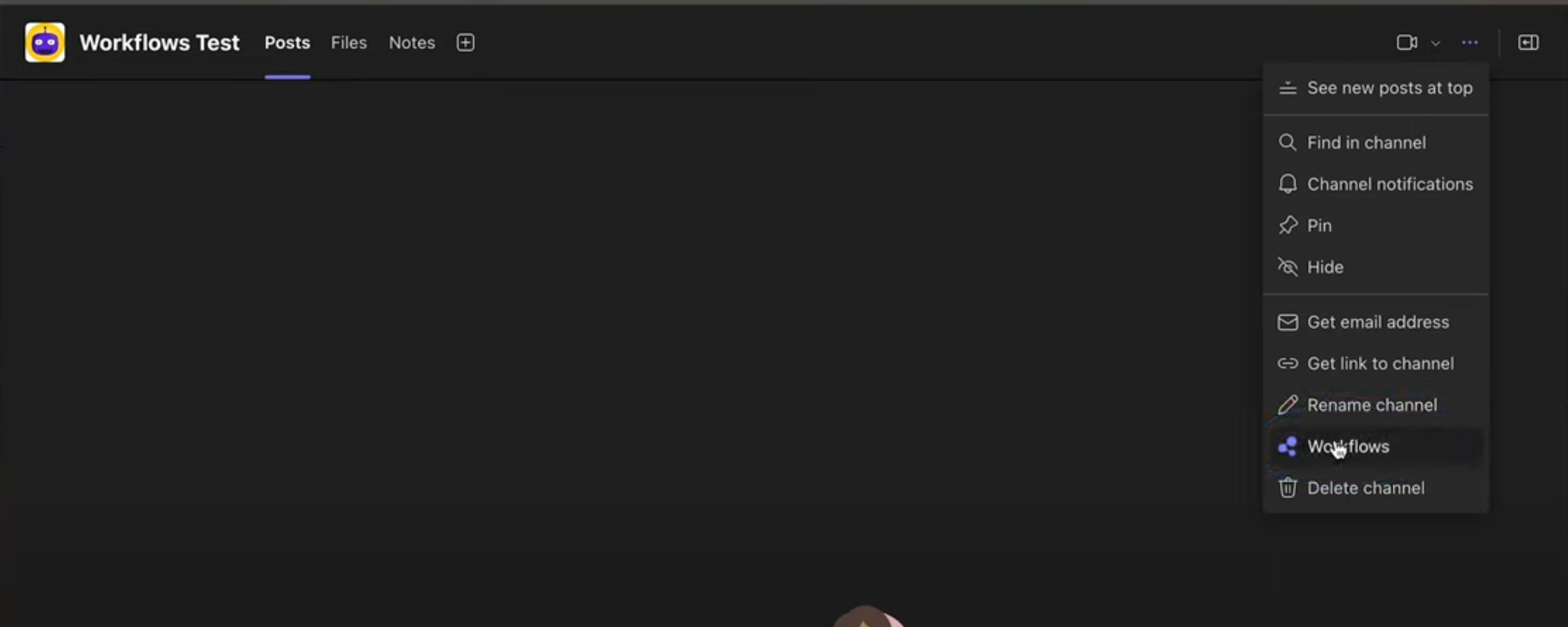
1. Open Microsoft Teams and select the channel you would like to receive an Luciq notification on. From the three-dot menu on the top right, select Workflows.
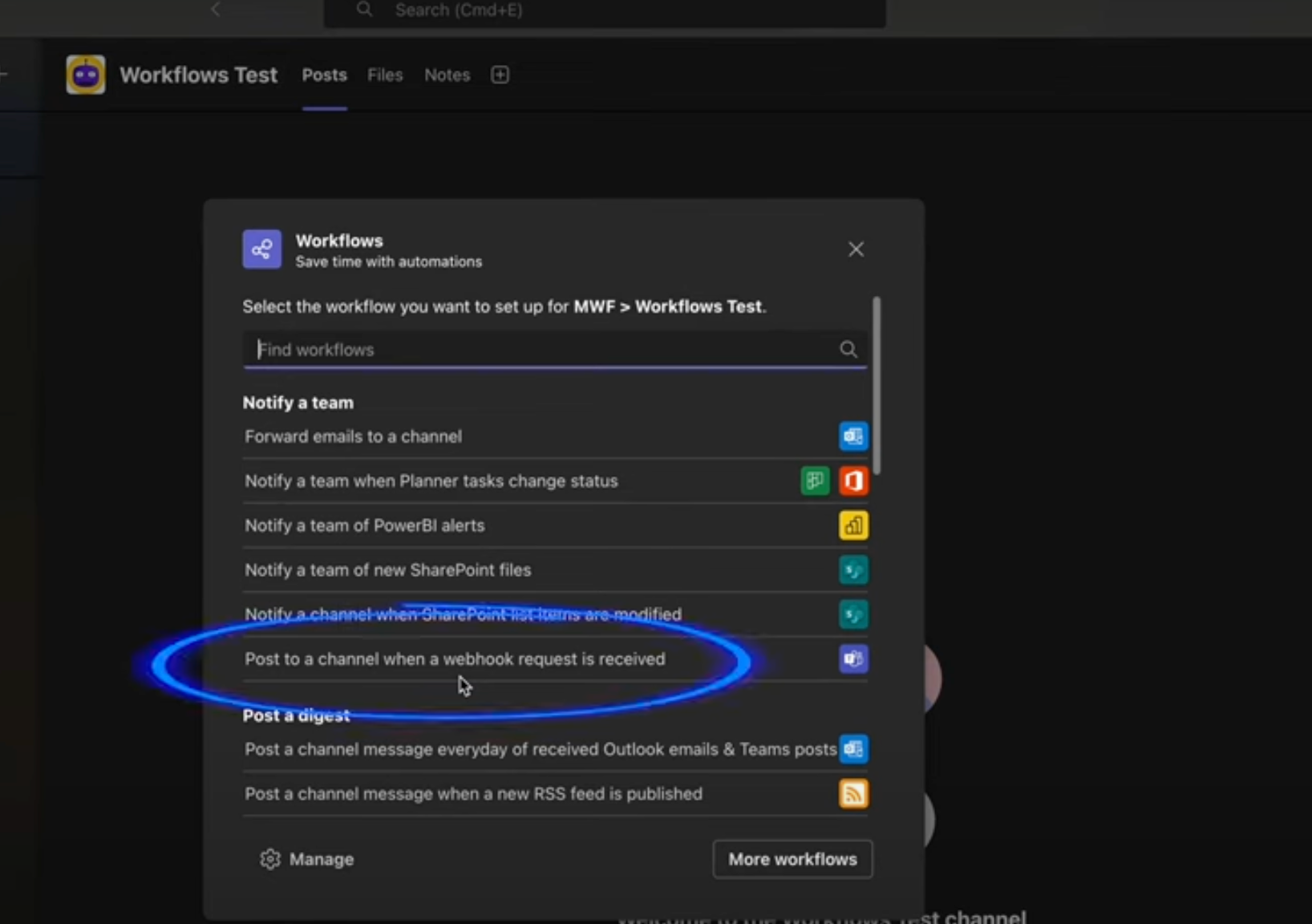
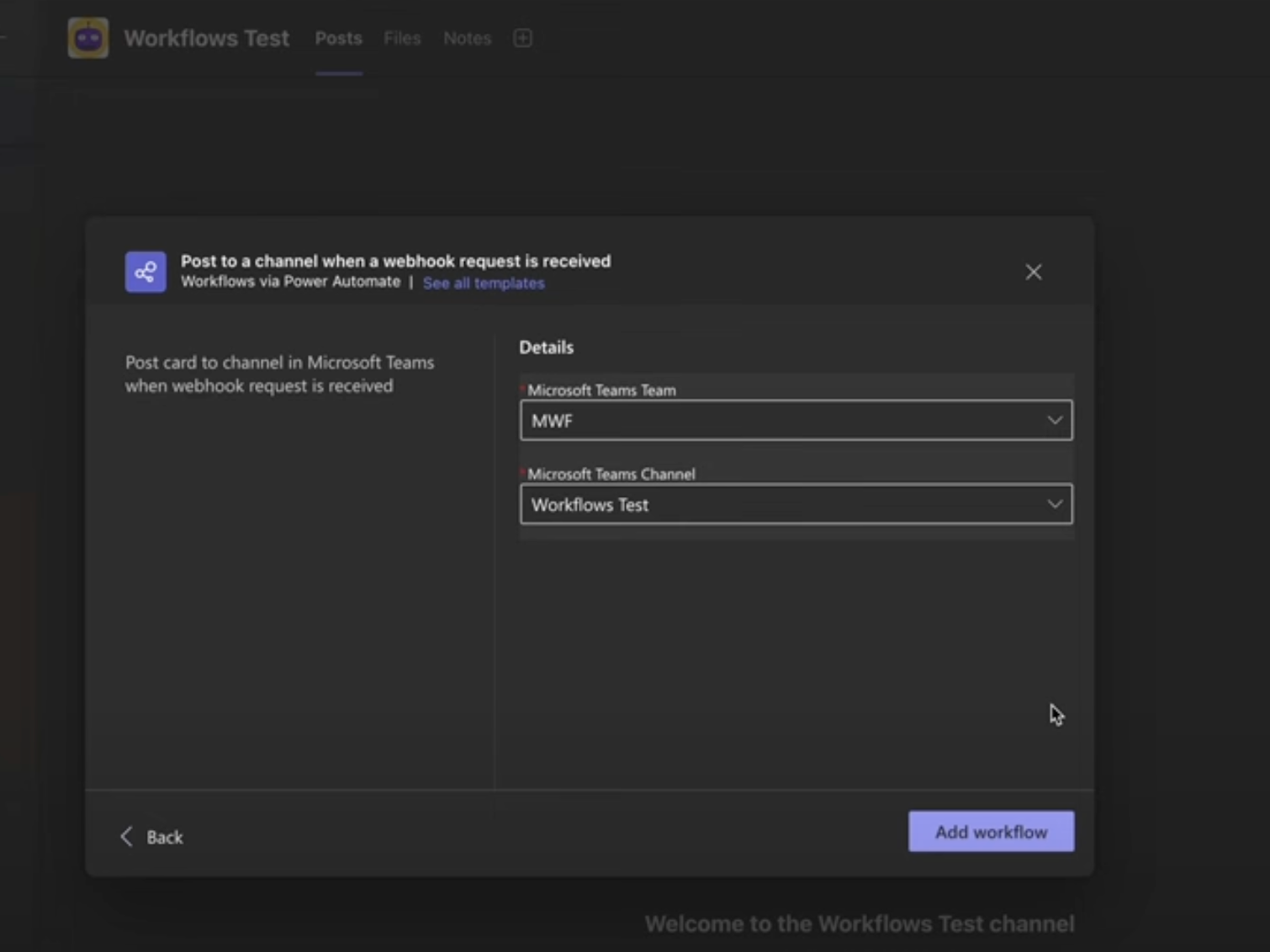
2. Select “Post to a channel when a webhook request is received”.
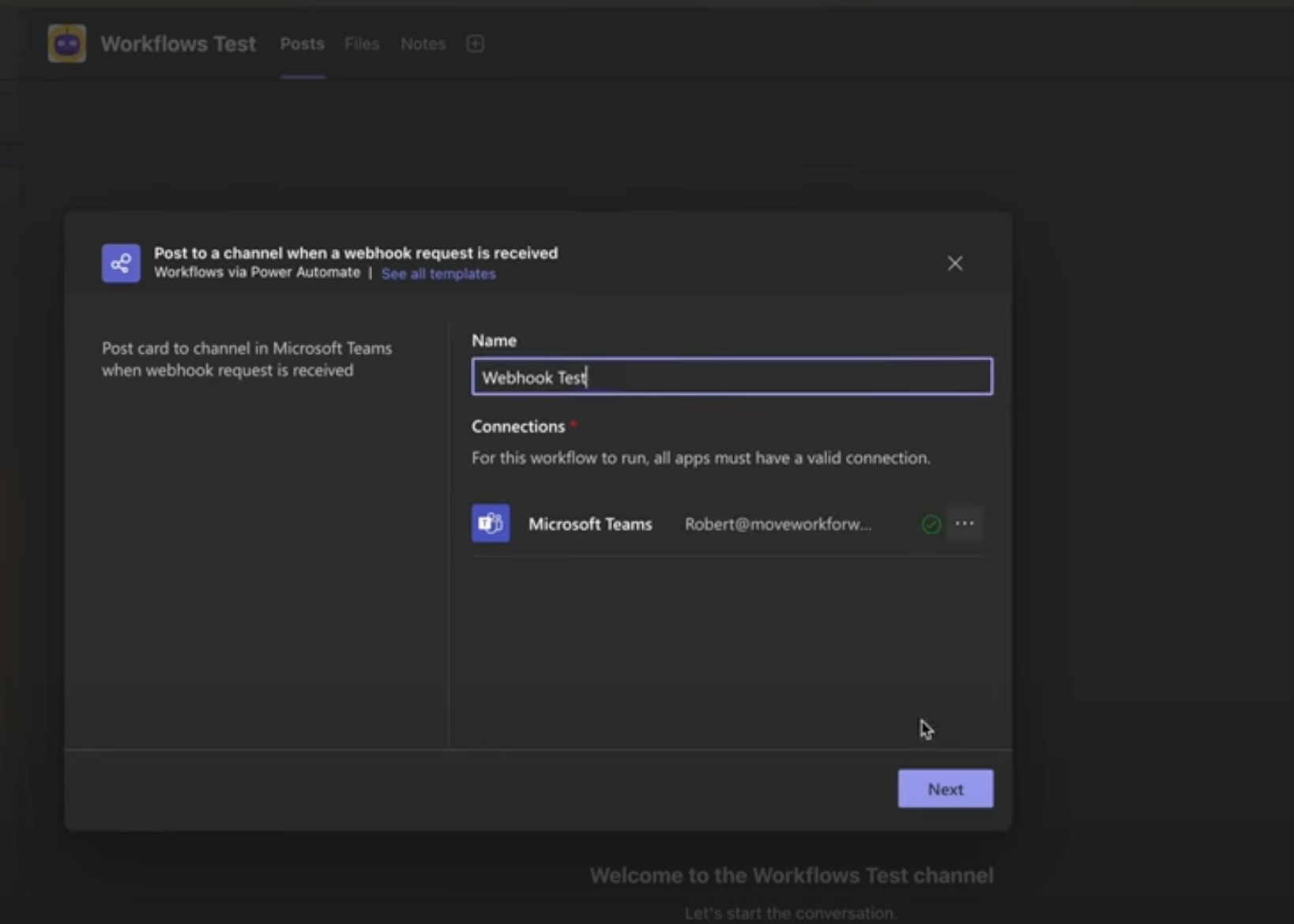
3. Name your workflow.
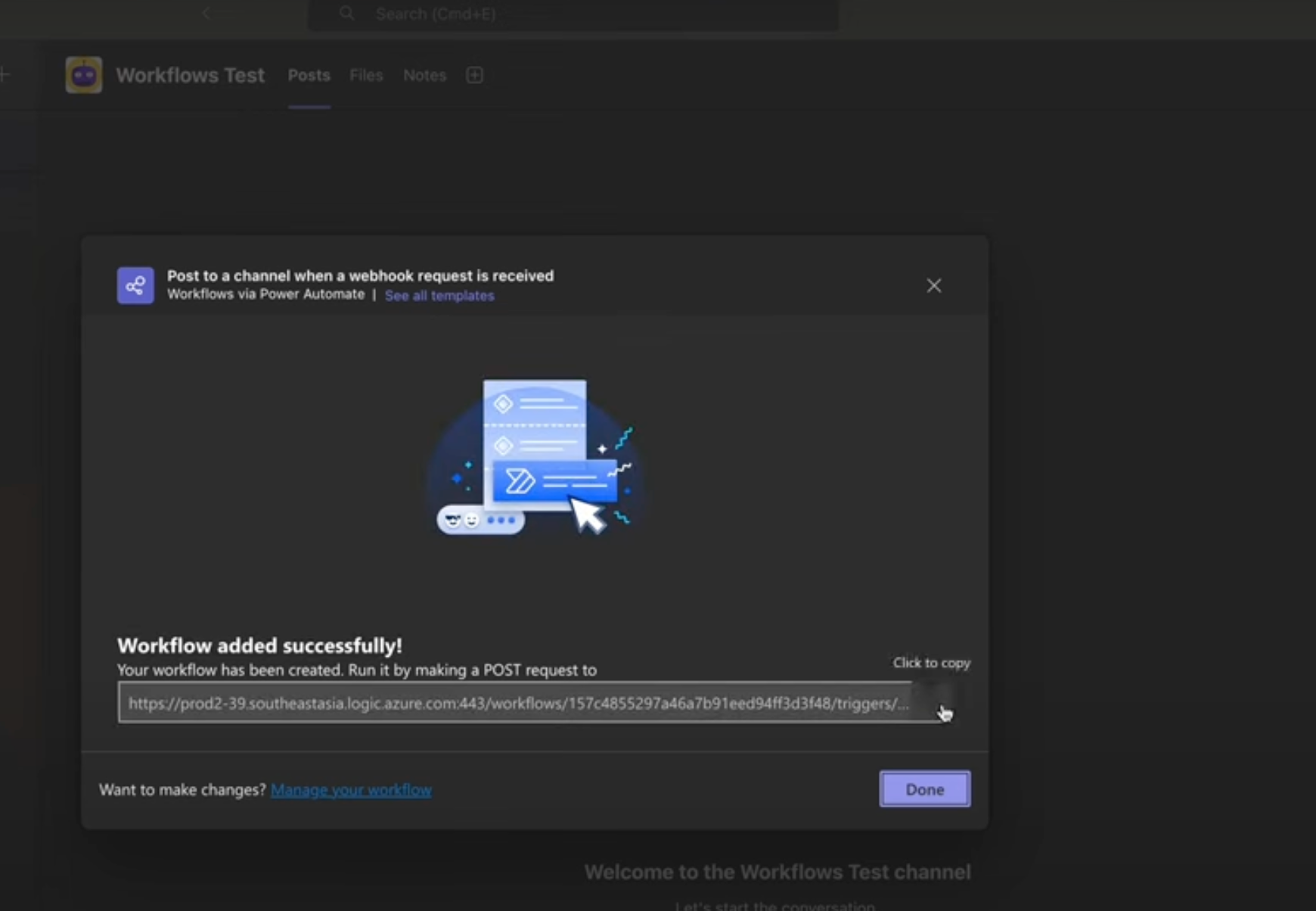
4. Copy the generated URL to your clipboard.
5. Select the team and channel, then confirm by clicking “Add workflow”.
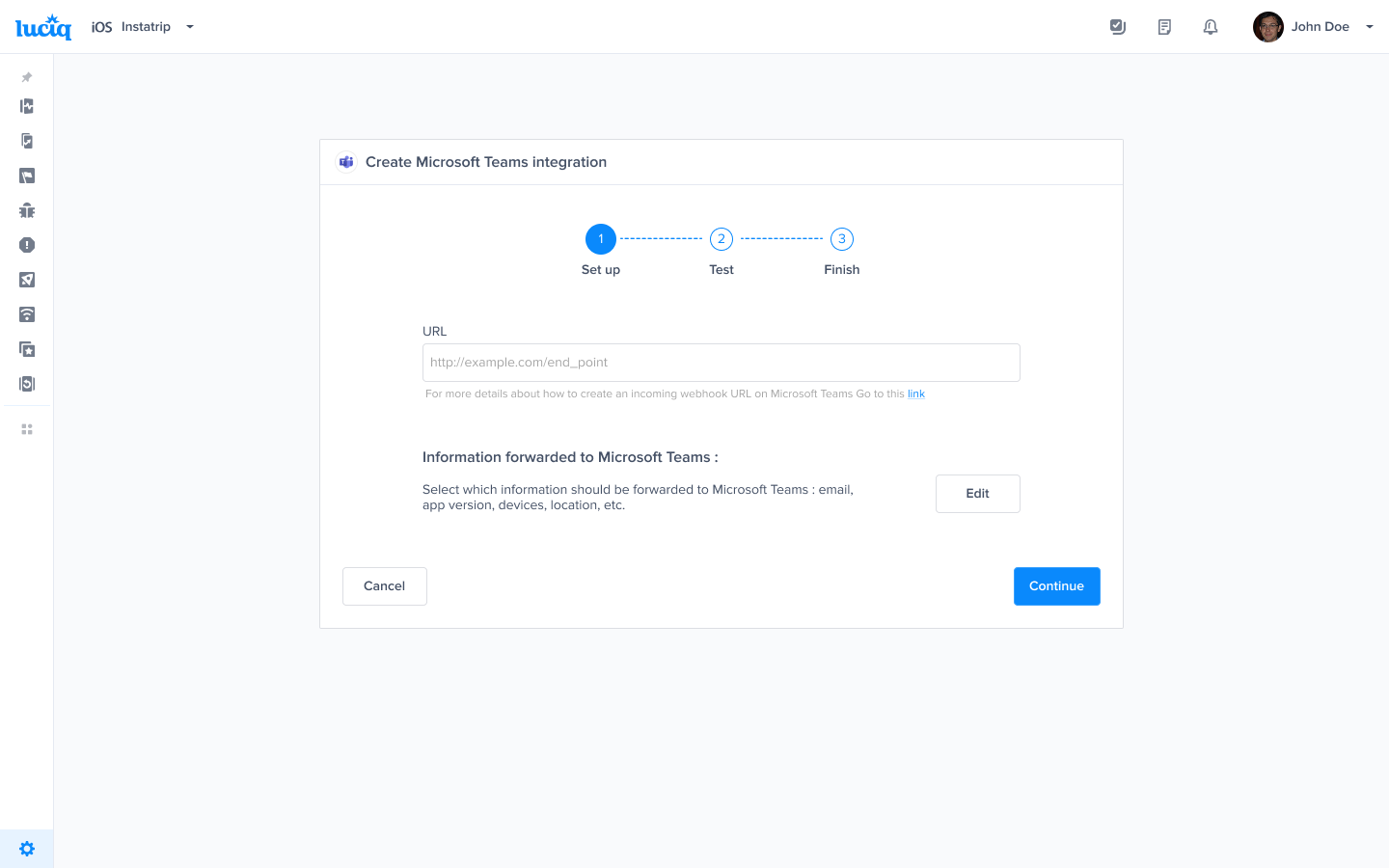
6. Go to the integrations page on your Luciq dashboard and select 'Microsoft Teams' to set up the integration. You will be prompted for the webhook URL we generated in Microsoft Teams.
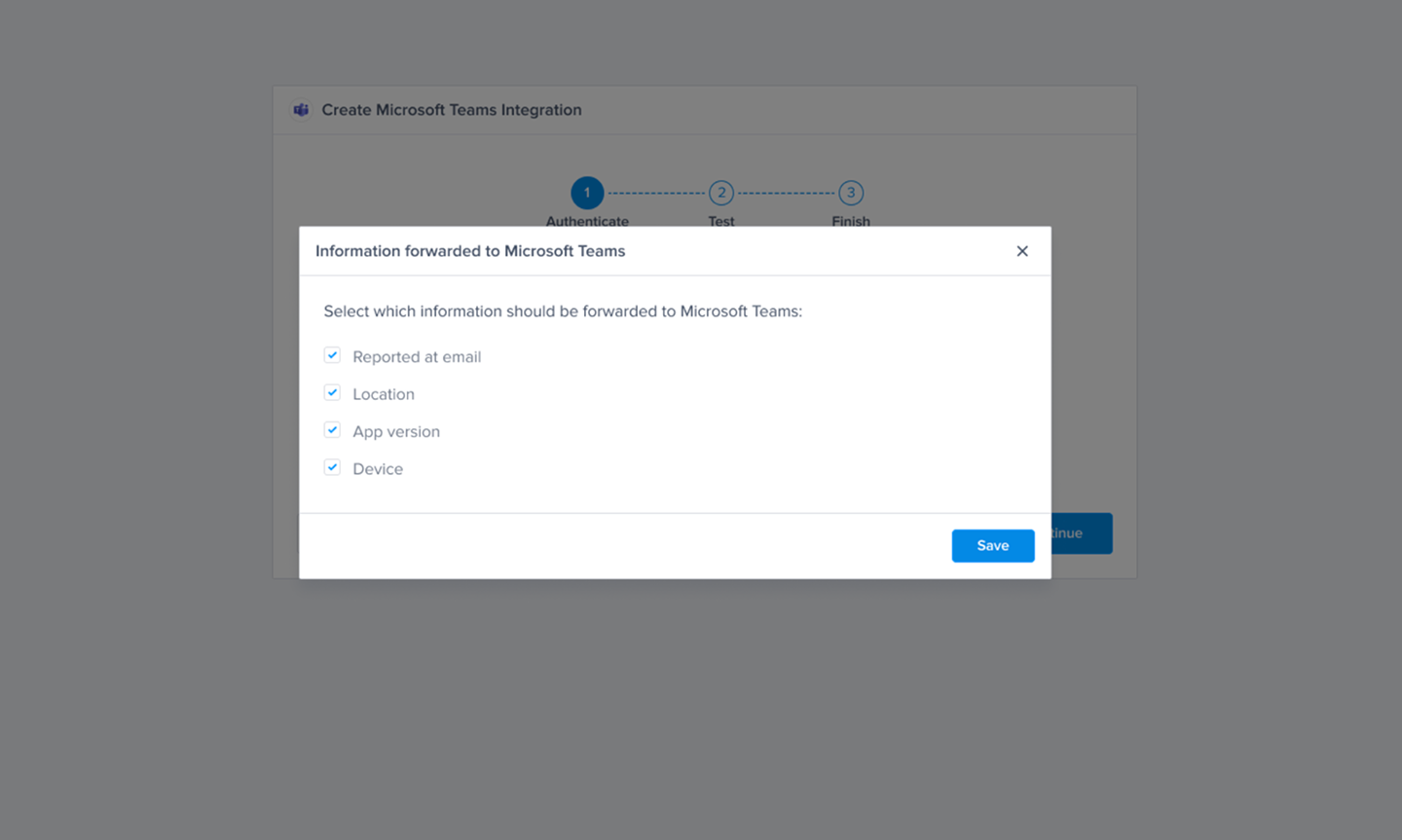
7. To customize the information you would like to be forwarded, select 'Edit' and choose the details you want to include. When you're done, select 'Save' and continue to the next step.
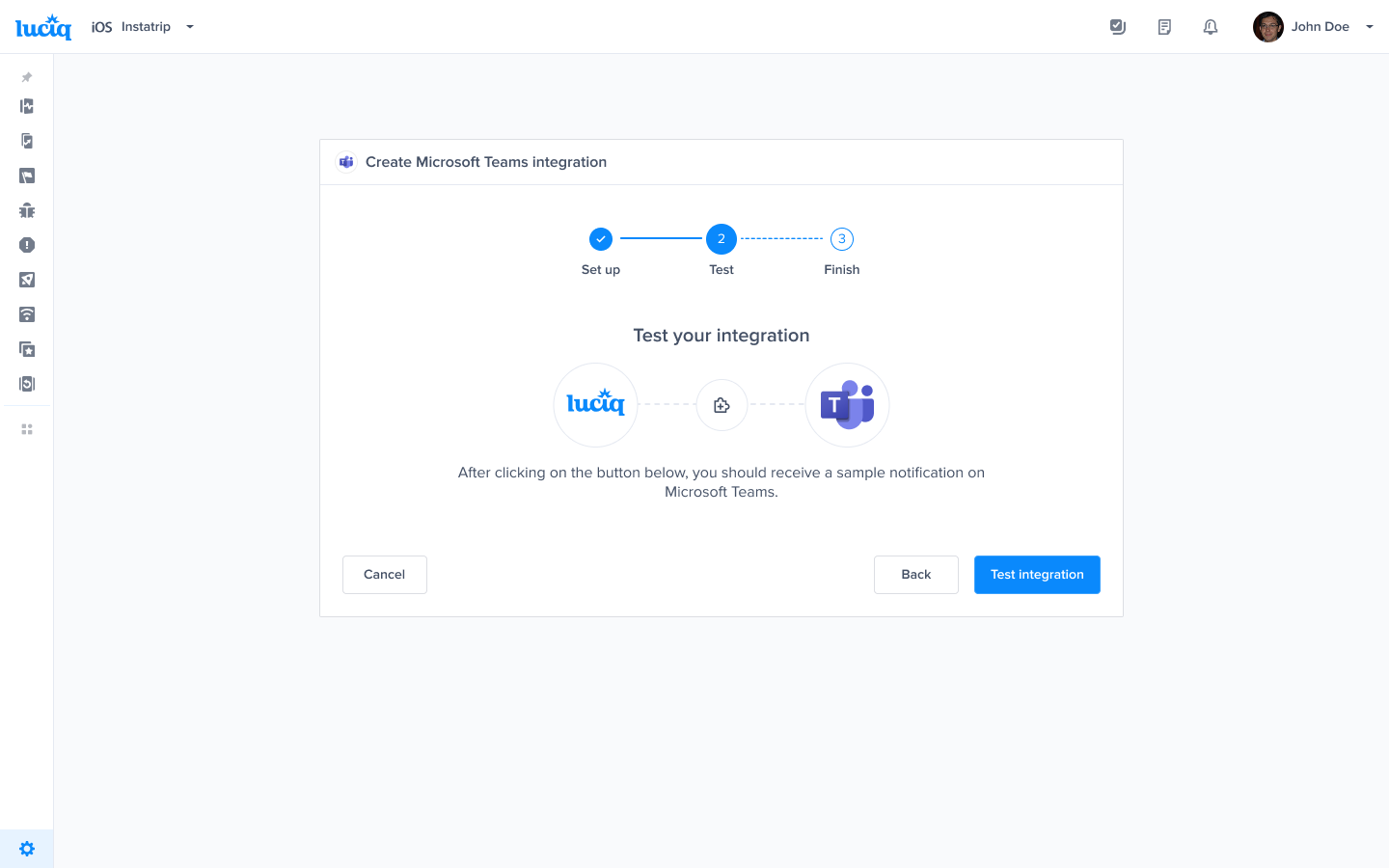
8. At this point, we need to test the integration with a sample notification to make sure everything is working as expected.
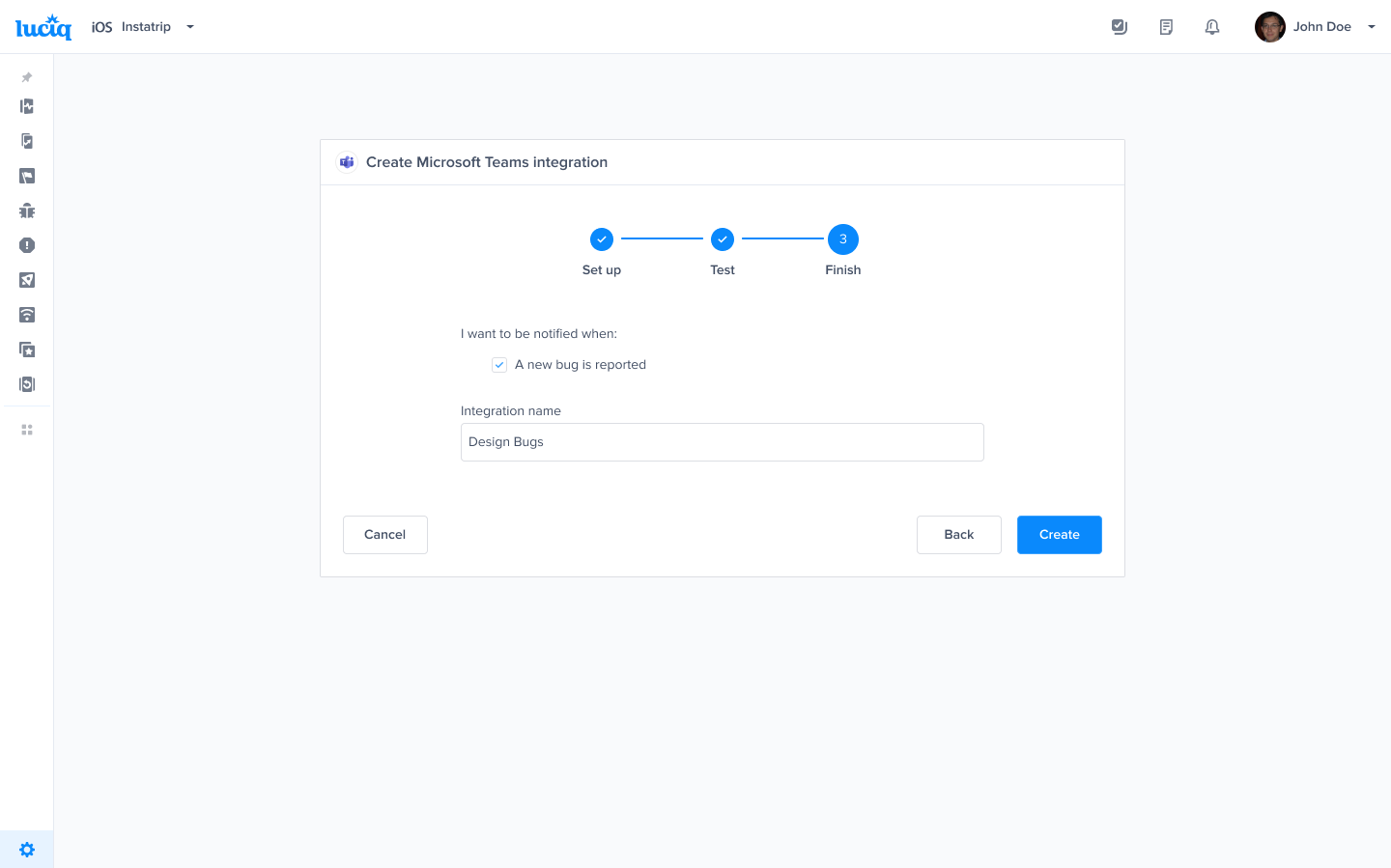
9. In the final step, you need to choose a name for this integration and whether you want to be notified of every new bug. You can also configure a rule to only forward specific bugs to this channel or team, depending on the conditions you set.
---
# Agent Instructions
This documentation is published with GitBook. GitBook is the documentation platform designed so that both humans and AI agents can read, navigate, and reason over technical content effectively. Learn more at gitbook.com.
## Querying This Documentation
If you need additional information that is not directly available in this page, you can query the documentation dynamically by asking a question.
Perform an HTTP GET request on the current page URL with the `ask` query parameter, and the optional `goal` query parameter:
```
GET https://docs.luciq.ai/product-guides-and-integrations/integrations/microsoft-teams.md?ask=&goal=
```
`ask` is the immediate question: it should be specific, self-contained, and written in natural language.
`goal` is optional and describes the broader end goal you are ultimately trying to accomplish on behalf of the user. GitBook uses it to tailor the answer towards what is most useful for that goal.
The response will contain a direct answer to the question and relevant excerpts and sources from the documentation.
Use this mechanism when the answer is not explicitly present in the current page, you need clarification or additional context, or you want to retrieve related documentation sections.